How Do Profile Geometry, Purlin Spacing, and Steel Grade Help Determine Roofing Sheet Thickness?
PPGI.LTD uses the approved roof profile and project inputs to help determine roofing sheet thickness. Profile shape, purlin spacing, steel grade, loads, and thickness must be reviewed together.
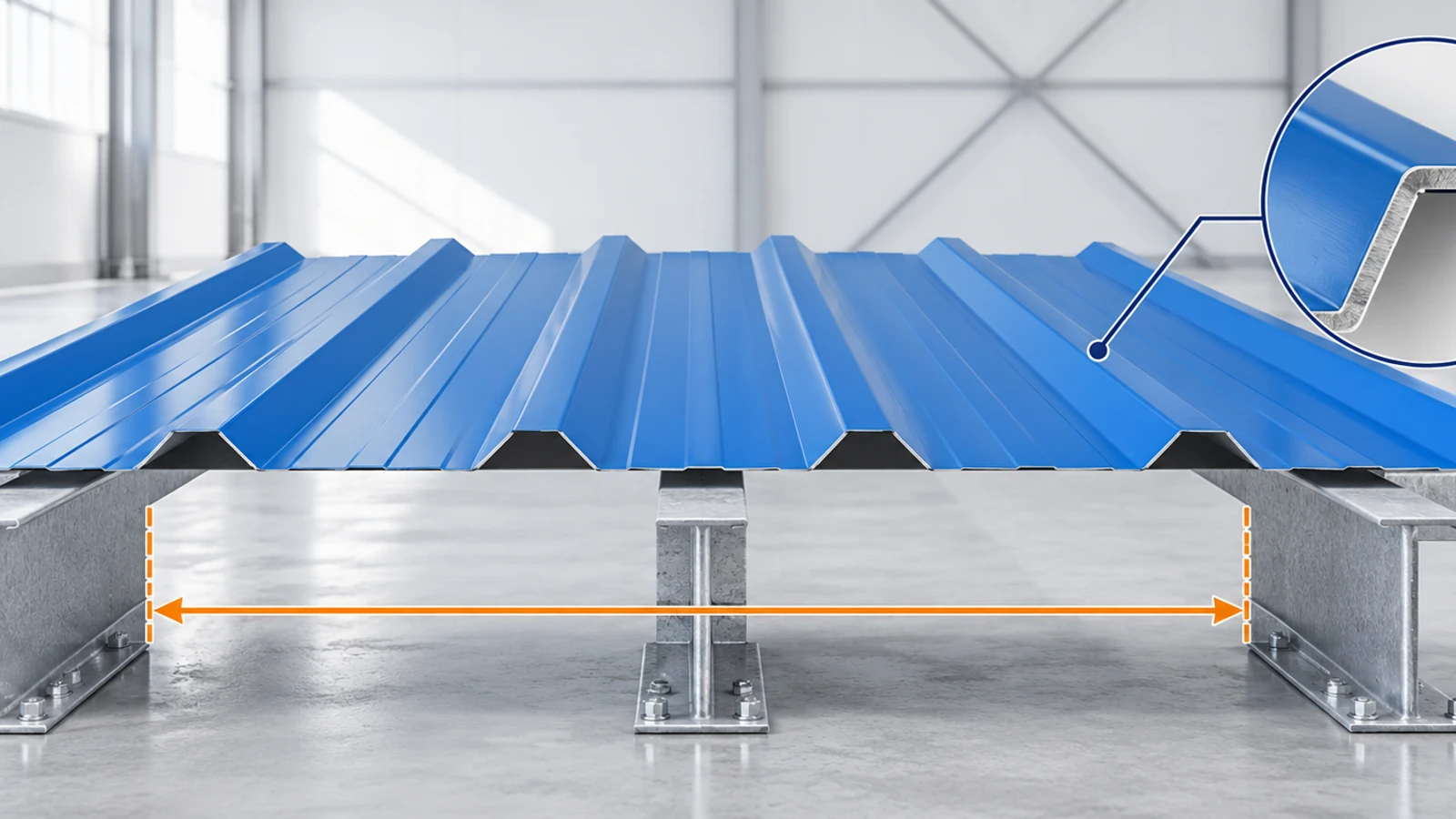
Determine Roofing Sheet Thickness: Start with the Roof Profile
Profile shape changes how the sheet carries load.
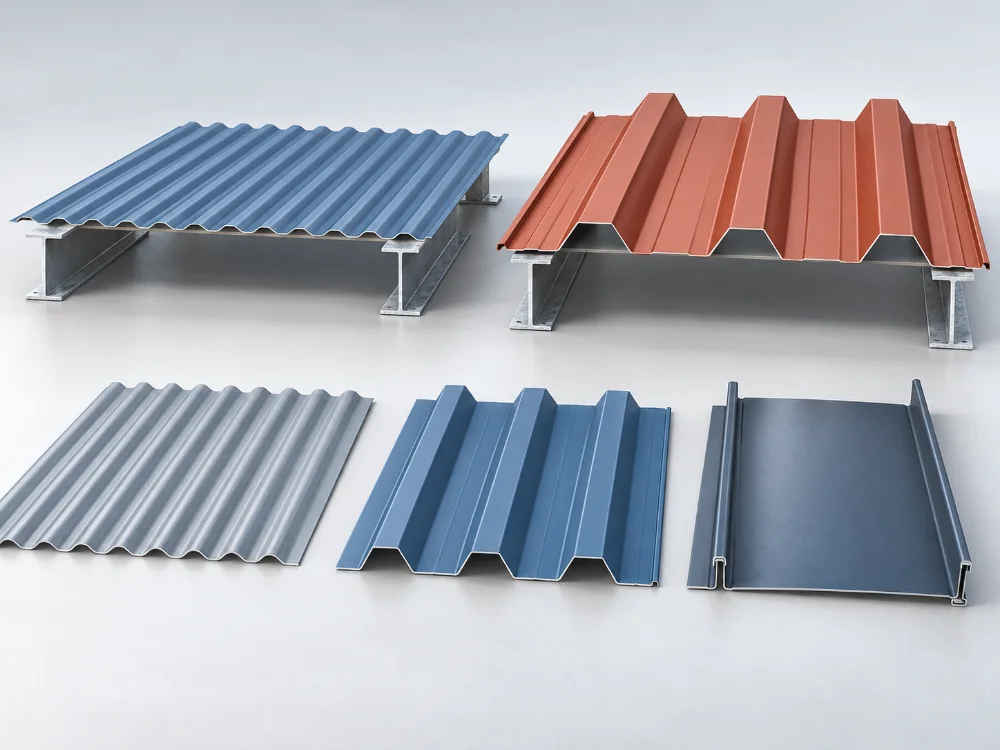
Shallow profileOne set of section properties
Deep profileA different set of section properties
Send the real profile drawing. Do not use data from another shape.
Use the Four Main Project Inputs
Thickness is one part of the decision.
Profile geometryRib height, pitch, and shape
Purlin spacingClear span and support
Steel gradeStrength and forming needs
Design loadsProject wind and other loads
The cold-formed steel design manual treats section properties, members, and connections as linked design parts.
Send One Complete Roofing Request
Clear inputs help PPGI.LTD quote the correct product and profile route.
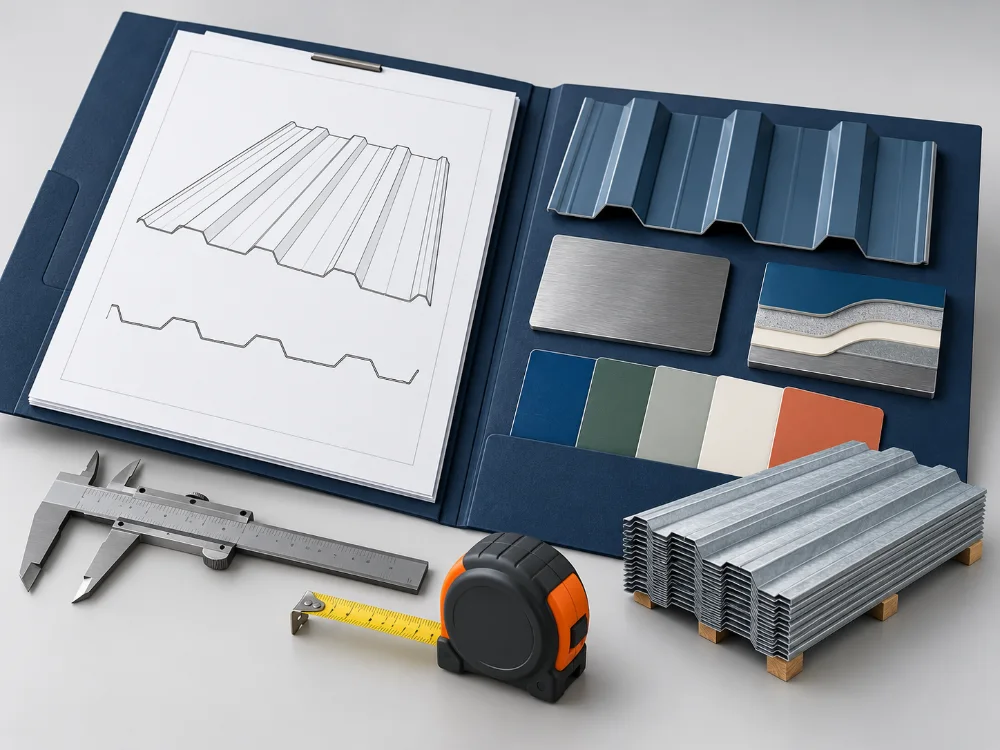
01Profile Drawing
02Support Spacing
03Grade and BMT
04Coating and Color
Buyer benefitLess guesswork and a stronger basis for the final order.
Confirm the difference between BMT and TCT before comparing offers.
Buyer Concern & FAQ
Is a Thicker Roofing Sheet Always the Best Choice?
No. Use the approved profile, support spacing, grade, loads, fasteners, and code basis together.
Can One Thickness Be Used for Every Roof Profile?
No. Different profiles have different section properties and matching capacity data.
What Should I Send to PPGI.LTD for a Roofing Quote?
Send the profile drawing, support spacing, grade, BMT or TCT basis, coating, color, width, length, and order quantity.