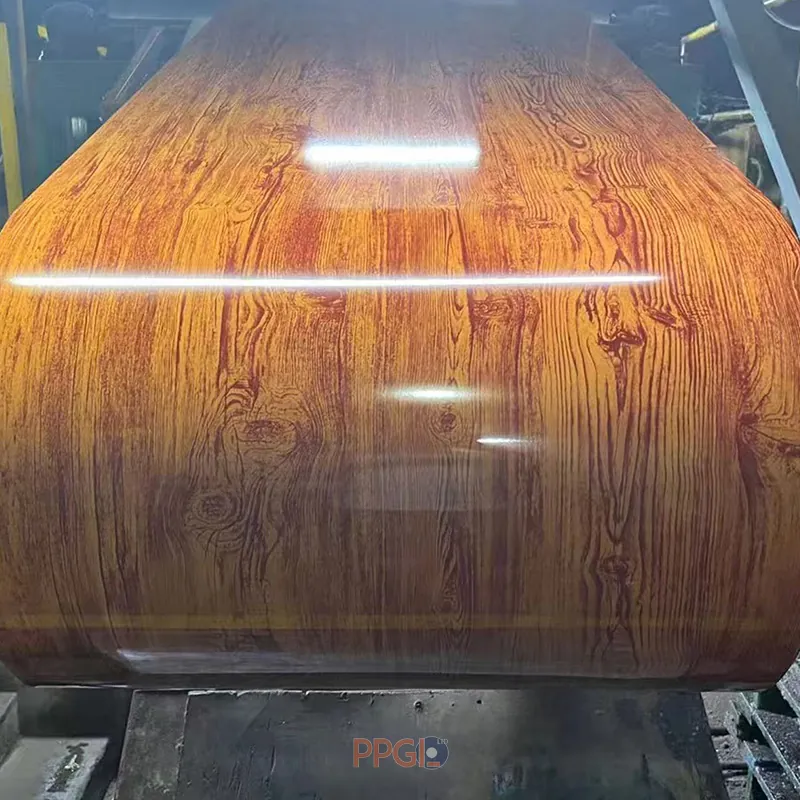
PPGI Coating Structure: 6-Layer Steel Sheet Guide
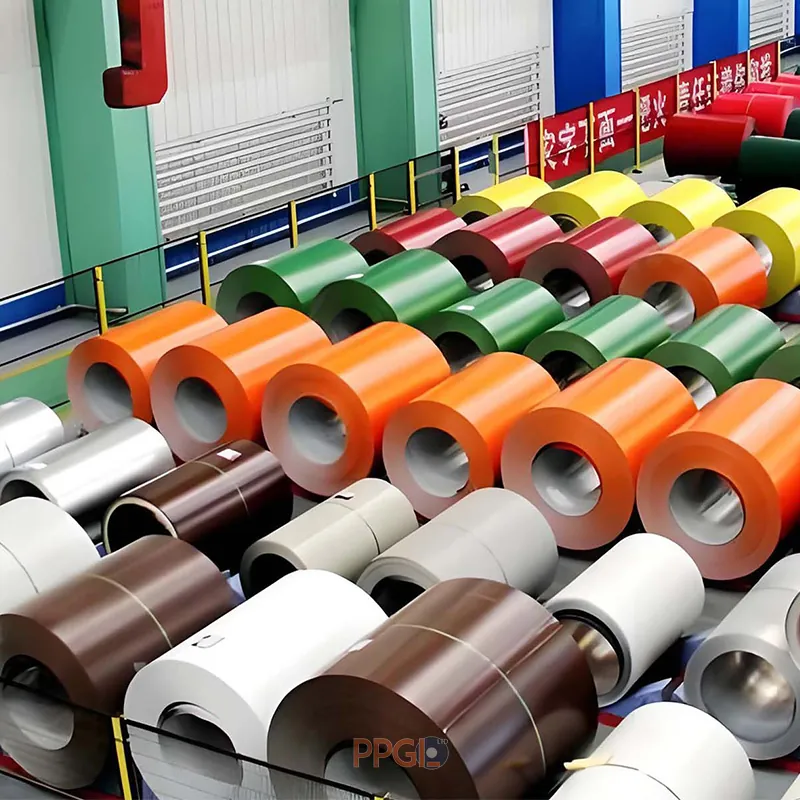
Discover the engineered PPGI coating structure behind 6-layer steel coils (wood grain, marble, brick) featuring enhanced UV resistance, anti-scratch clear varnish, and optional PE film protection.
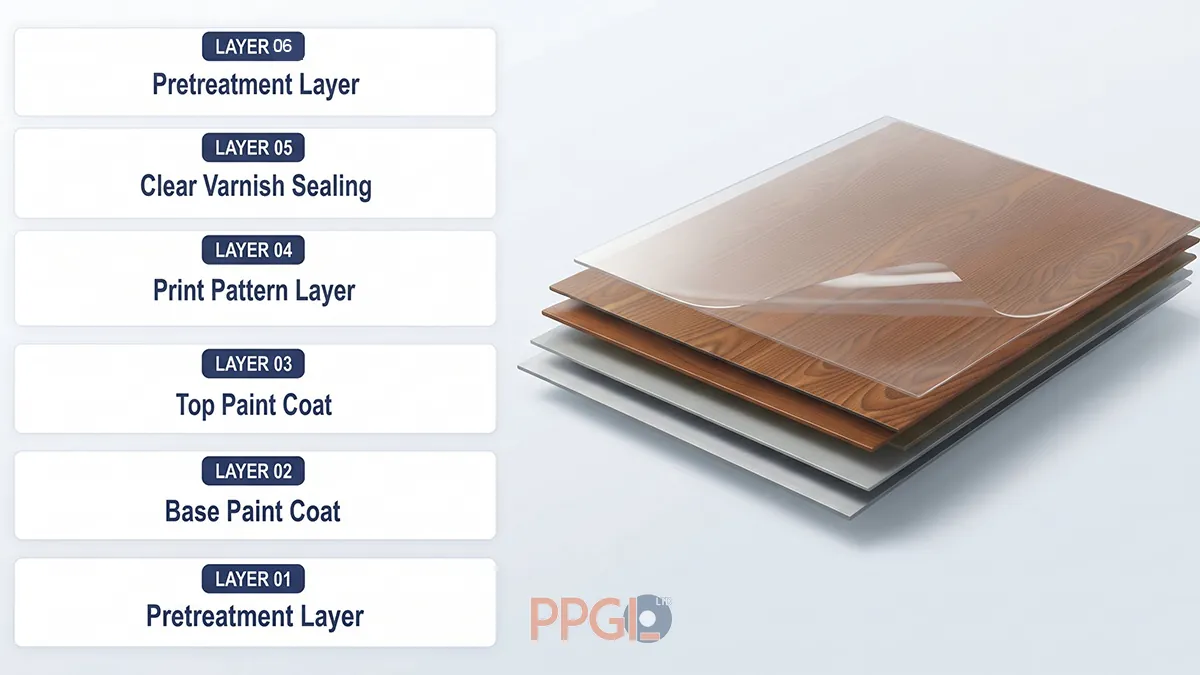
Precise 6-Layer PPGI Coating Structure Breakdown
Engineered for high-durability applications, our complete 6-layer PPGI coating structure strictly complies with ASTM International standards and ECCA (European Coil Coating Association) technical guidelines.
Pretreatment Layer
Microscopic chemical passivation film applied after degreasing to optimize paint bonding to the metal core.
Base Paint Coat
Primary background color resin layer providing solid aesthetic tone and foundational exterior weatherability.
Top Paint Coat
Advanced high-weatherability performance topcoat enhancing resistance against UV rays and environmental erosion.
Print Pattern Layer
High-precision gravure roller printing applying intricate wood grain, marble, or brick patterns with high fidelity.
Clear Varnish Sealing
UV-resistant transparent protective coat baked over the pattern layer to prevent fading, gloss loss, and scratching.
Protective PE Film
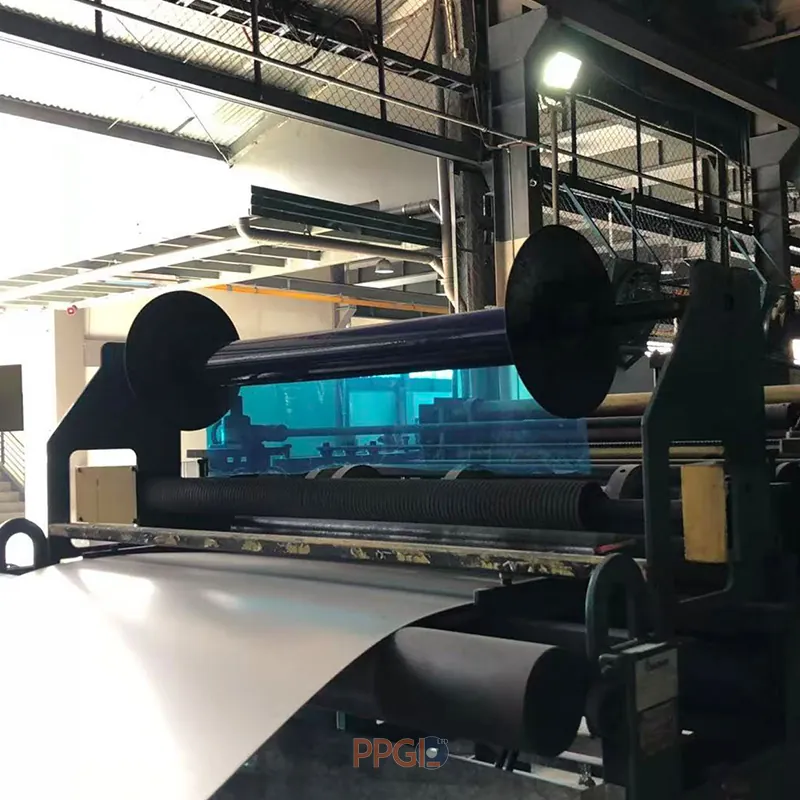
Optional 30–50 µm peelable polyethylene film applied on top to secure the surface during transit and roll-forming.
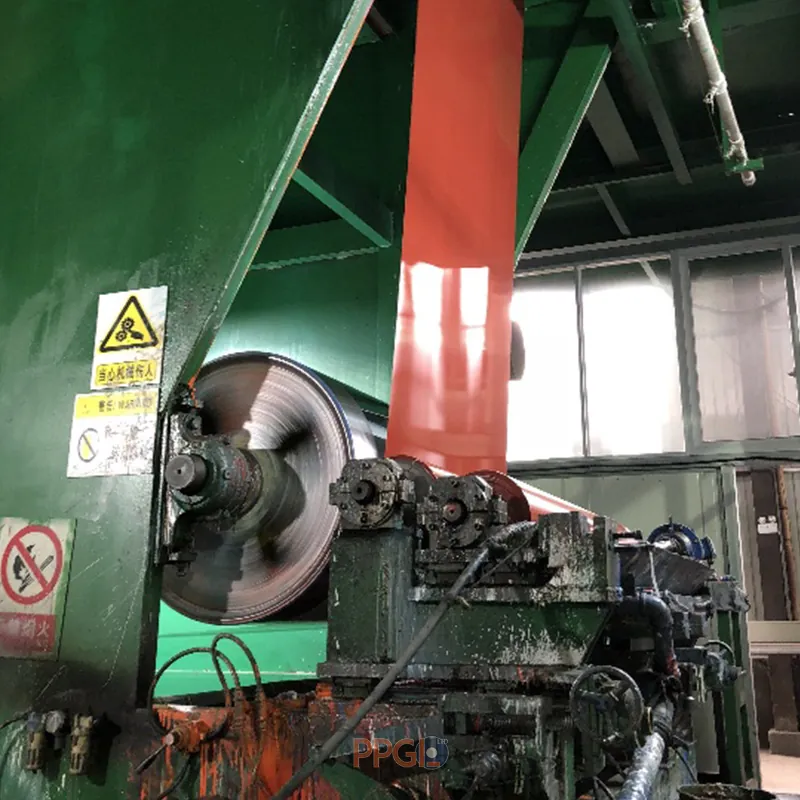
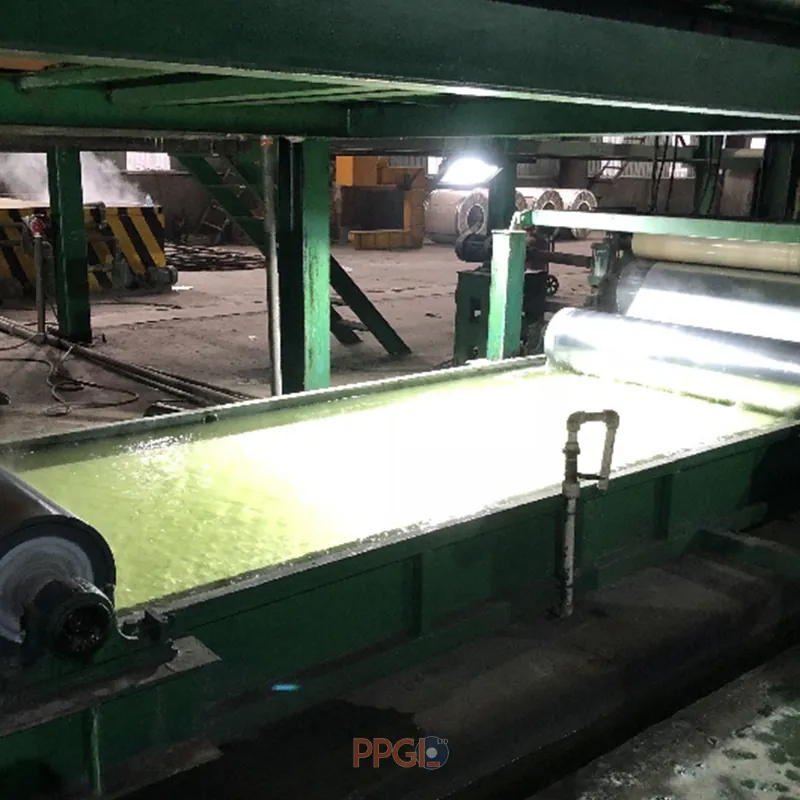
Factory Production & Processing Workflow
Buyer Concern & FAQ
What are the key technical differences between PE, SMP, and PVDF paint coatings on steel coils?
As a direct manufacturer, PPGI.LTD provides distinct paint systems engineered for varied environmental exposures: Polyester (PE) offers reliable formability and general exterior economics; Silicon Modified Polyester (SMP) delivers enhanced surface hardness and chalk resistance due to silicone resin integration; and Polyvinylidene Fluoride (PVDF) utilizes high-grade fluoropolymer resins to provide superior UV retention and chemical resistance for harsh industrial or coastal climates.
How does the 6-layer coating structure prevent peeling and blistering during roll-forming?
The multi-tier system integrates a chemical conversion pretreatment layer and a specialized base paint coat that maximize molecular bond strength to the steel substrate, ensuring the paint film flexes without cracking or peeling during heavy mechanical roll-forming.
What paint thickness specifications are standard for exterior architectural roofing coils?
For standard architectural applications, topcoat paint thickness typically ranges from 20 to 25 micrometers (µm) over a 5 to 10 µm primer layer, while the backside features a protective backer coat of 5 to 10 µm to ensure balanced surface tension.
How are color-coated coils protected against surface scratching during transport and handling?
An optional 30–50 µm peelable polyethylene (PE) protective film can be laminated over the topcoat to safeguard the painted surface against mechanical abrasion during transit and on-site handling.